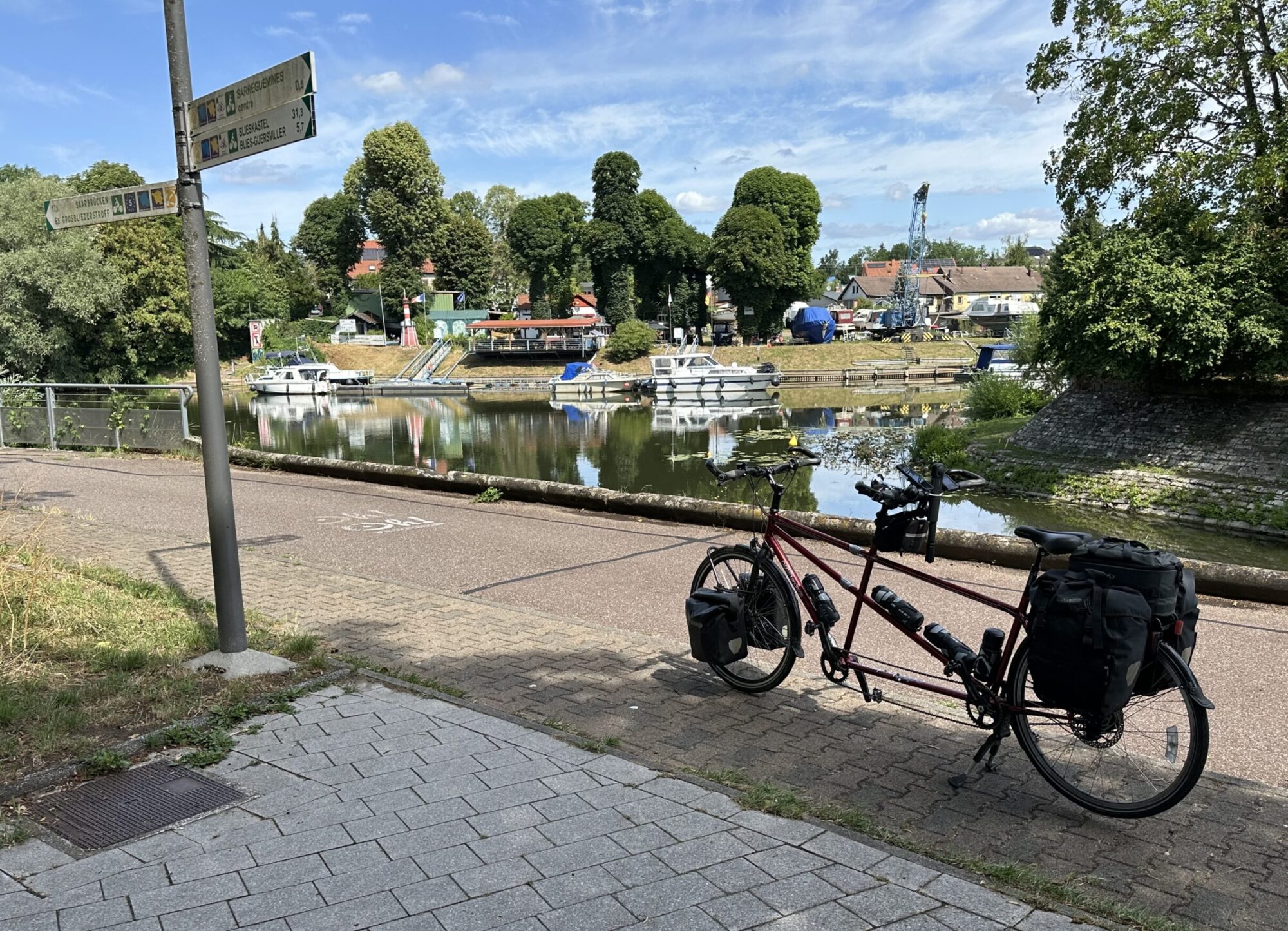
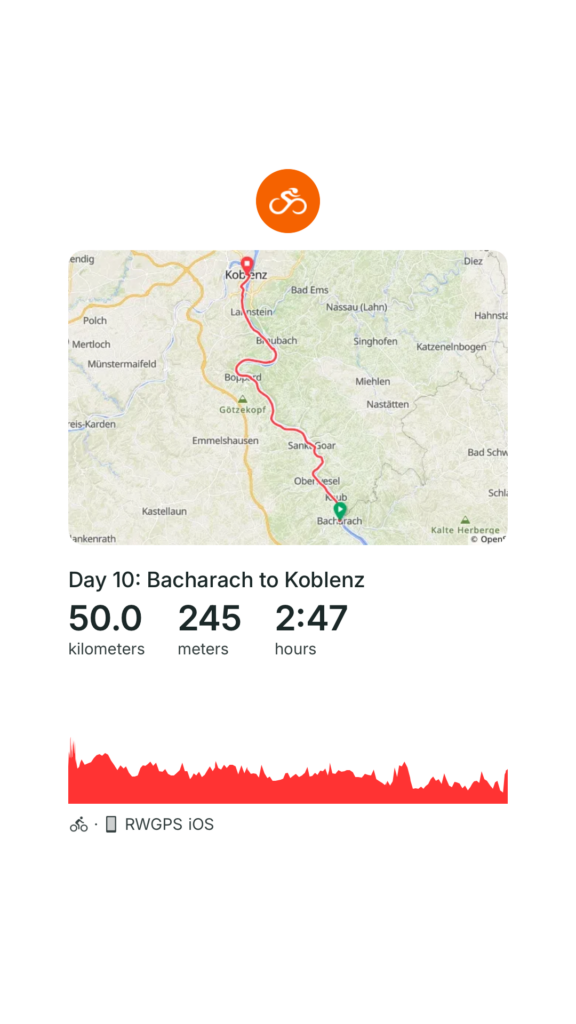
Distance: 49.1 kilometres
Time: 2 hours 42 minutes
Speed: 18.2 km/h
Ascent: 140 metres
Total distance: 447.3 kilometres
Total time: 25 hours 8 minutes
Word of the day: Jugenderinnerungswiederbelebung: Revisiting a memory from one’s youth
The Stoker writes:
We both felt completely wiped out on arriving in Bacharach on Thursday, after the rigours of the headwind and the temperatures. The last ten kilometres had been really tough to get through for each of us. But we made it! Luckily our apartment was already available for us to occupy. Unluckily it was on the second floor… It was lovely, though, when we finally made it up the stairs with our panniers, it was cool and spacious, and we sat on the sofa eating chocolate biscuits and drinking water and tea until we felt slightly more with it. Even more wonderfully, it had a bath, which was just fabulous to soak our weary bodies in.
Revived by all this we headed out at 6pm to have an aperitif at the Weingut next door in their shaded courtyard, overlooking the old Mint, built in 1357.
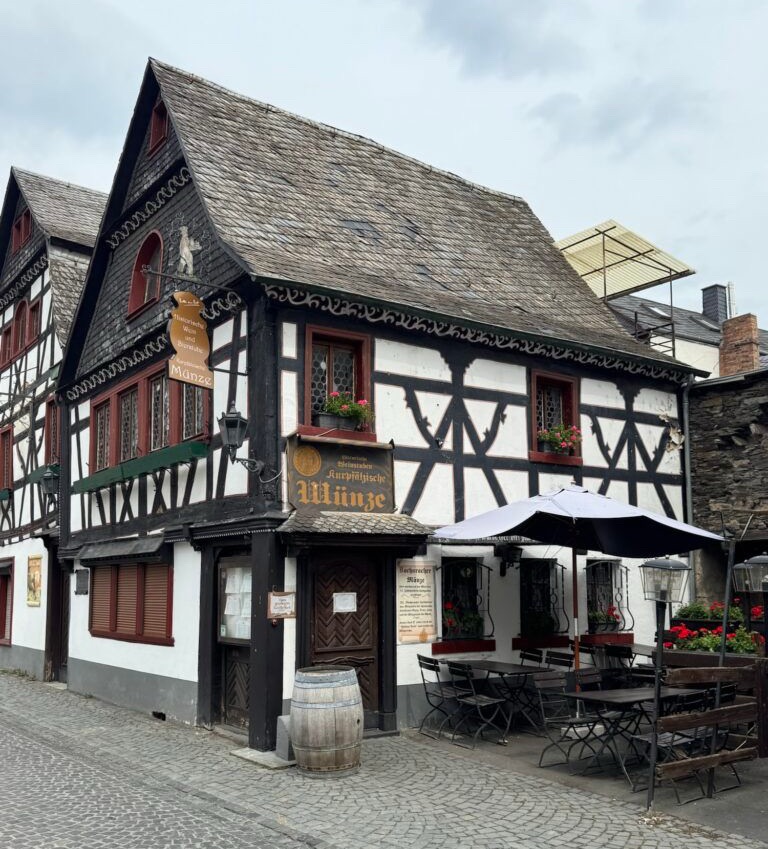
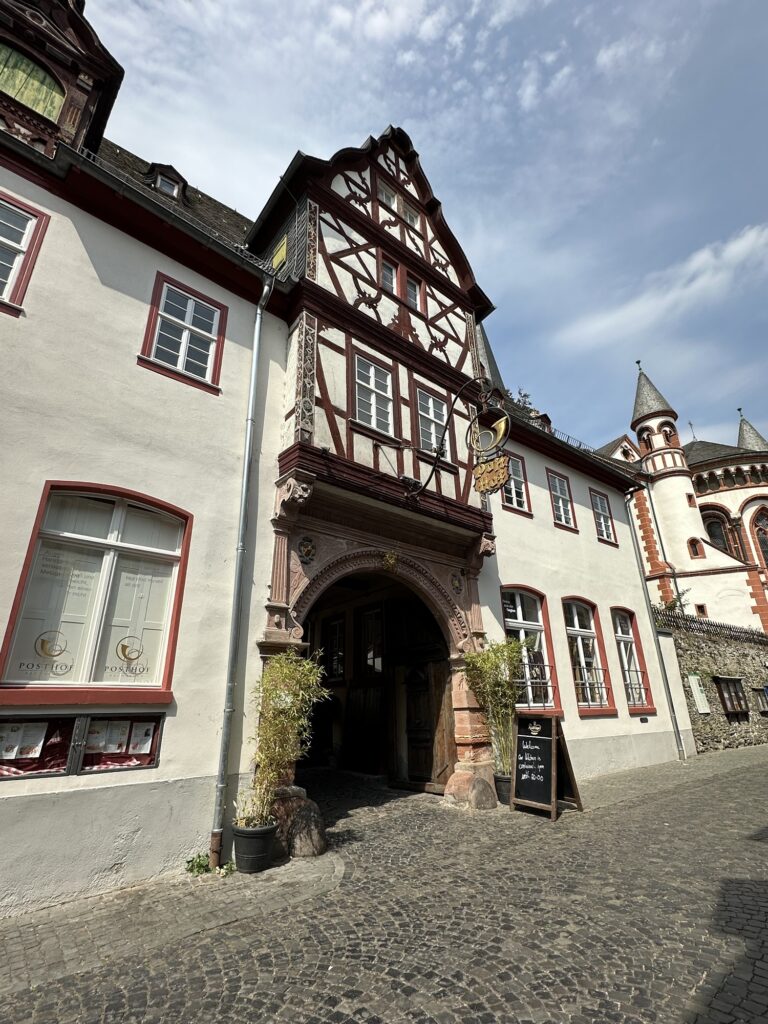
It was quite something to be able to have a glass of dry Riesling produced by the Weingut itself, from grapes grown right here in Bacharach. It couldn’t have been more local! We headed to the sixteenth-century Posthof for dinner in the courtyard, curry wurst for the Captain, first of the trip, and schnitzel with a delicious mushroom sauce for me.
We’d decided to extend our Saar and Mosel ride onto the Rhein upstream as far as Bacharach for two reasons, the first being just to get a couple more cycling days in, in our attempt to boost our fitness levels. The second reason, as previously mentioned, was my teenaged school trip here with other students who were also learning German. I’d have been about fourteen, I think.
I don’t remember a huge amount about the trip. I remember the overnight ferry crossing from Hull to Rotterdam and back being complete torture – that was my first time at sea, and how I learned that I was a terrible sailor. I remember a very long coach journey from Rotterdam to Bacharach. The coach driver had only one tape which he played over and over and over again. For hours. Each way. I can never hear ‘Turning Japanese’ or that Minnie Riperton song with the really high squeaky bit without being instantly transported to that coach seat and the numbing interminableness of the journey. No smart phones in those days to entertain ourselves, and I couldn’t really read a book much, as I don’t travel particularly well on coaches either! I remember little trips out while we were here, including Boppard and the Lorelei, both of which we passed on our ride in. I remember the Rhein being enormous, and the hotel being quite simple, with pretty awful food, situated right at one end of the village, with dark wood staircases going up in a spiral to the upper floors where our rooms were.
I definitely don’t remember how incredibly pretty the village is, or how historic. Many of the buildings here date back to the fourteenth century, there are a lot of bowing wooden beams which have been holding things up for centuries. There were originally sixteen gates in the fortified walls, seven of which are still in place today, and looking amazing. We rode in through one on our arrival.
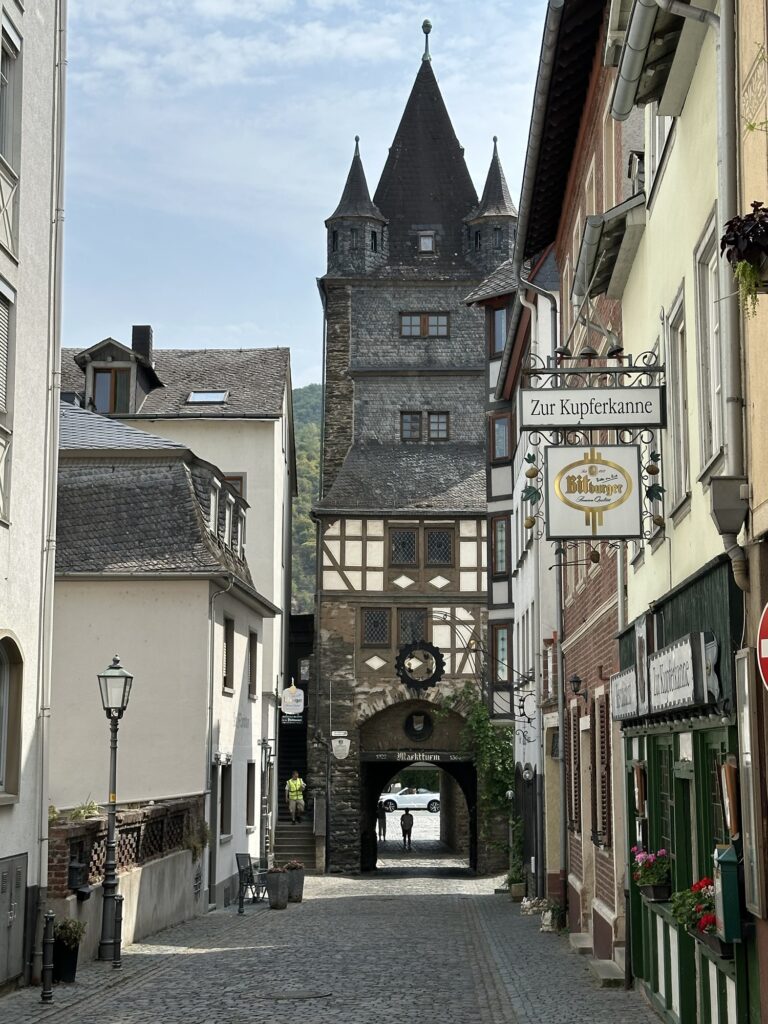
On our rest day yesterday we had a relaxing morning, and did some forward planning – buying train tickets, sorting out where to park when we get back to Koblenz in the car, setting a reminder to NOT FORGET TO TAKE THE CAR KEY WITH US WHEN WE GET THE TRAIN BACK TO THE START! All that complete we had a lovely lunch on the main street and a good wander about. Here are some pictures.
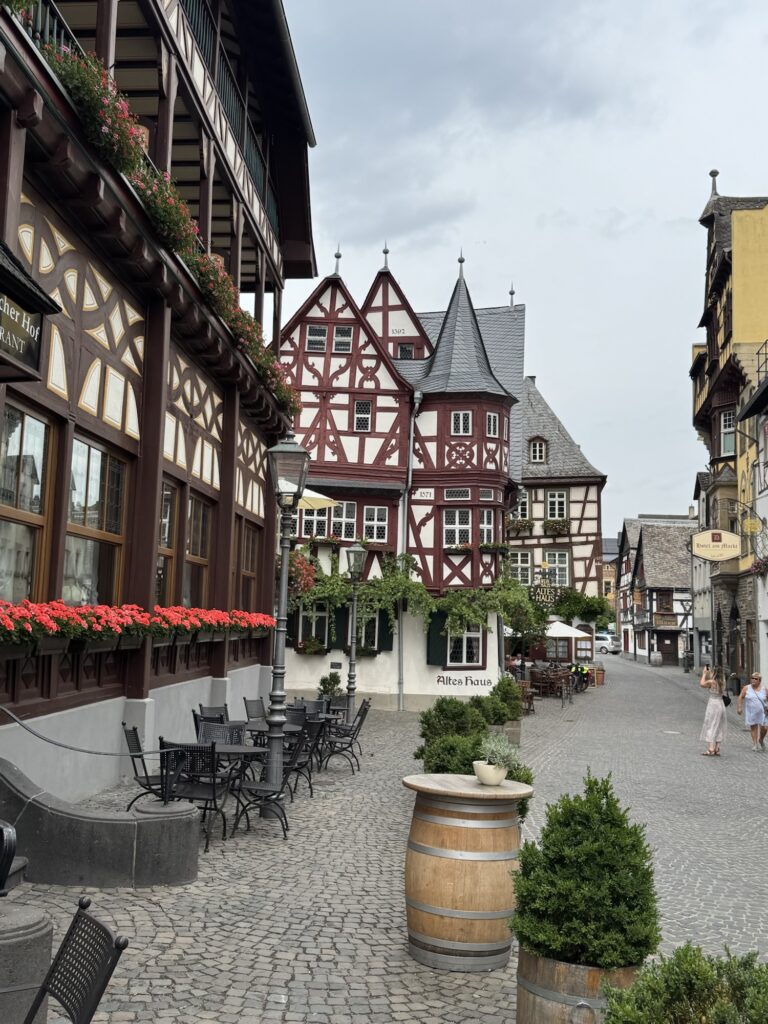
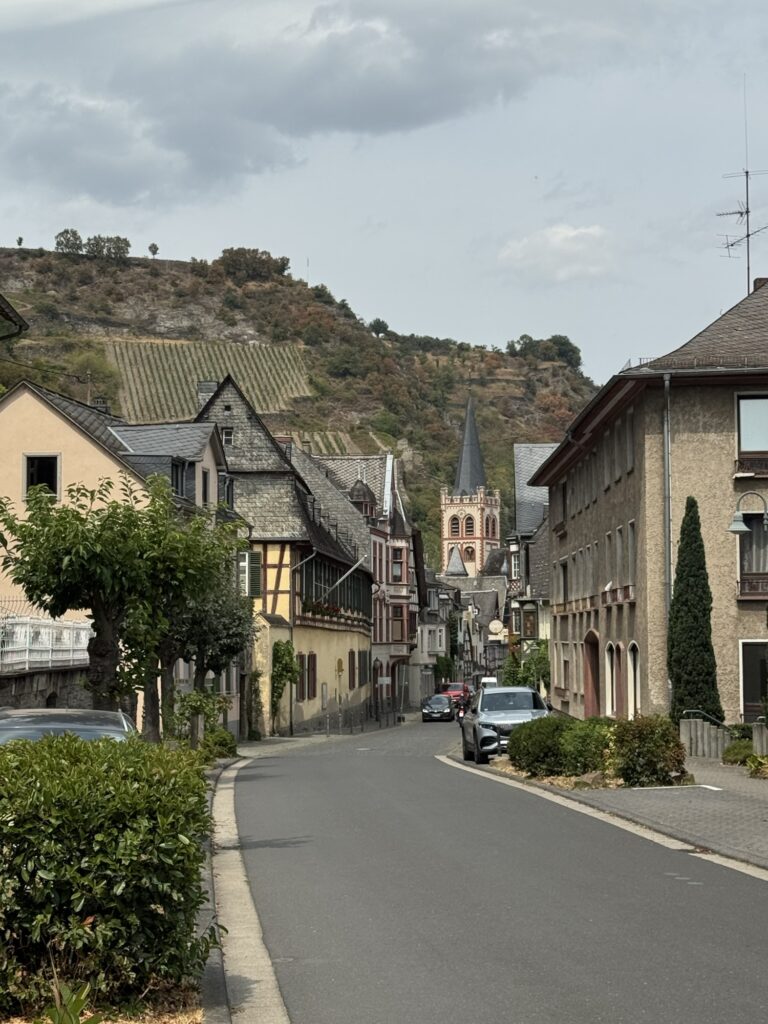
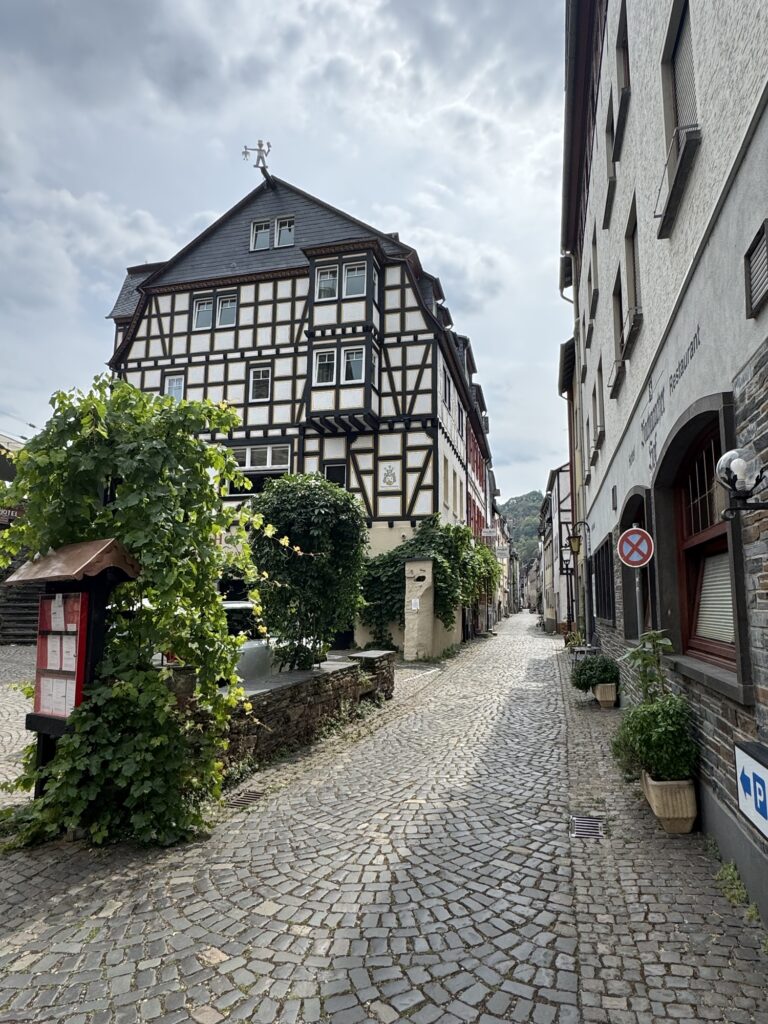
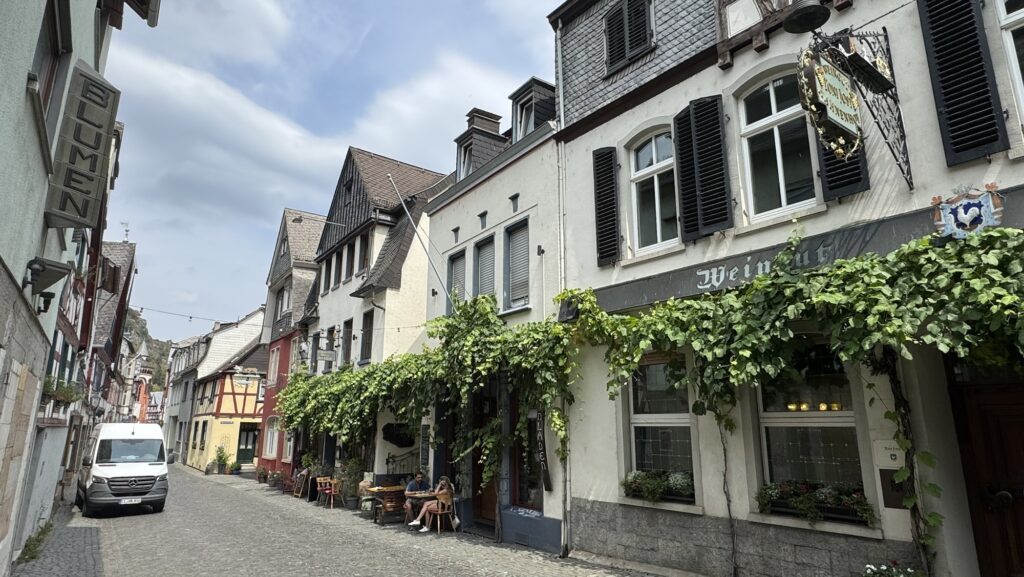
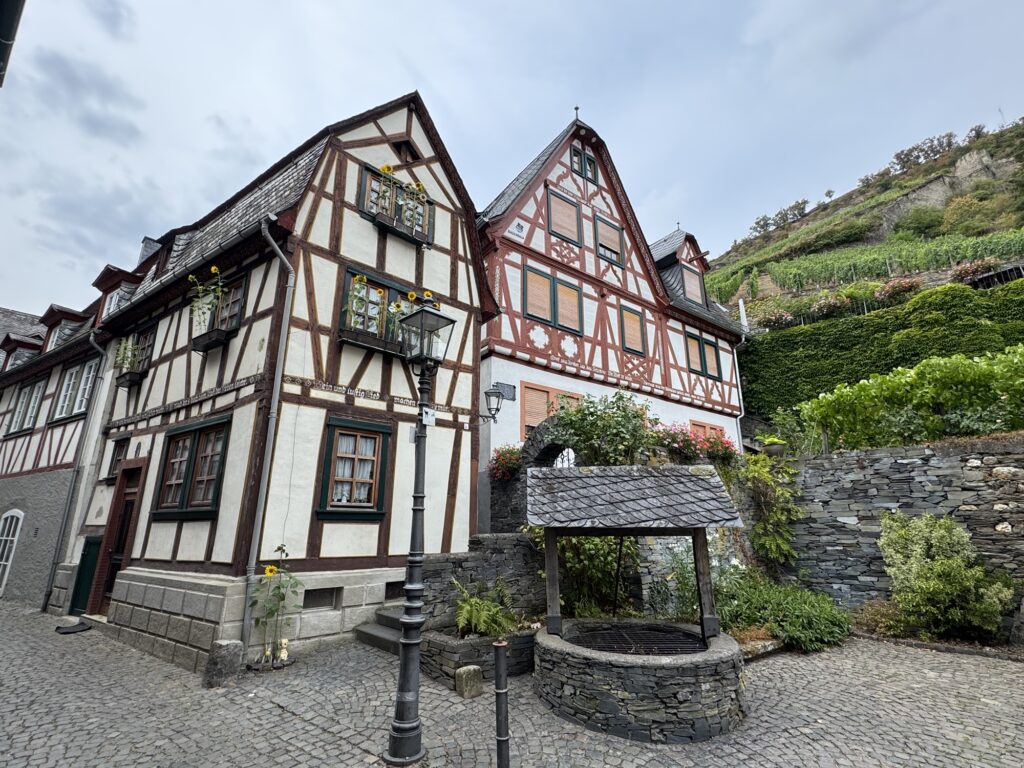
Beautiful, eh? As we got to the far end of the village on our walkabout a building came into view which suddenly looked a lot like the school trip hotel – tall, many stories, lots of windows facing the river. As we got closer we could see it had been converted into apartments. We walked up the steps to the glass doors and I peered in… Bloody hell, it’s the dark wood staircases!
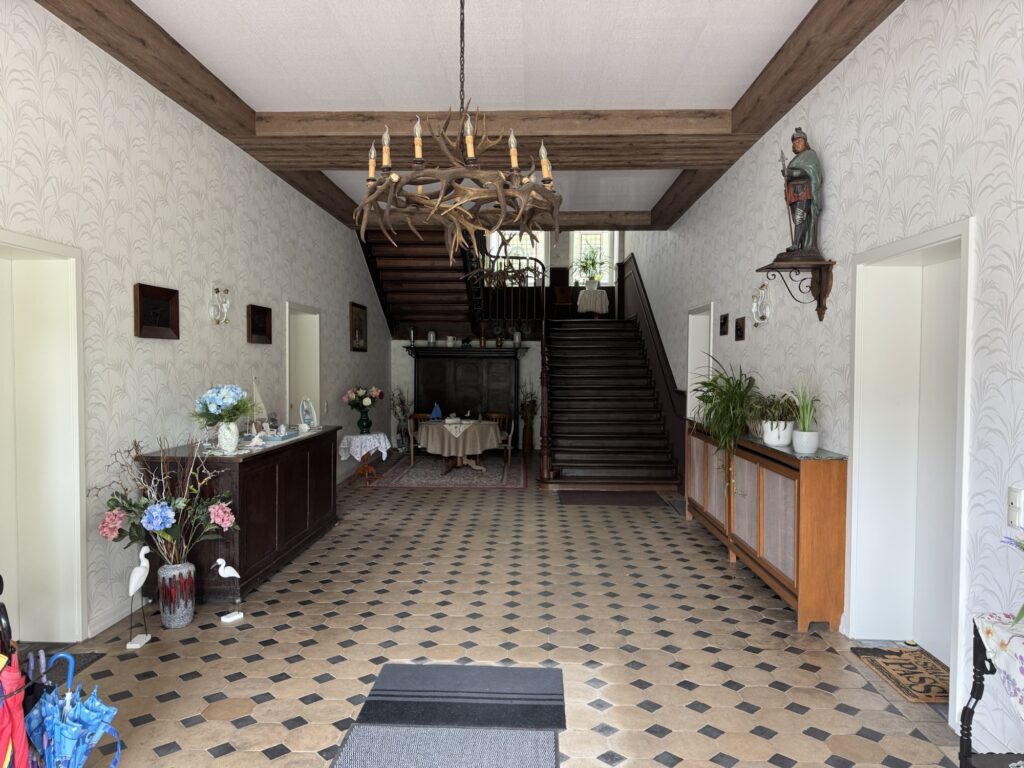
They look exactly as I remember. The dining room where the awful dinners were served was off to the left there through the white doors. Anything that wasn’t eaten turned up in soup for the first course the next day. One evening there was one rather lonely slice of tomato left. “I bet it’s tomato soup tomorrow”, someone intoned, gloomily. Reader, it was…
We had a rather more delicious dinner of flammkuchen in the Weingut next to our apartment. And so to bed.
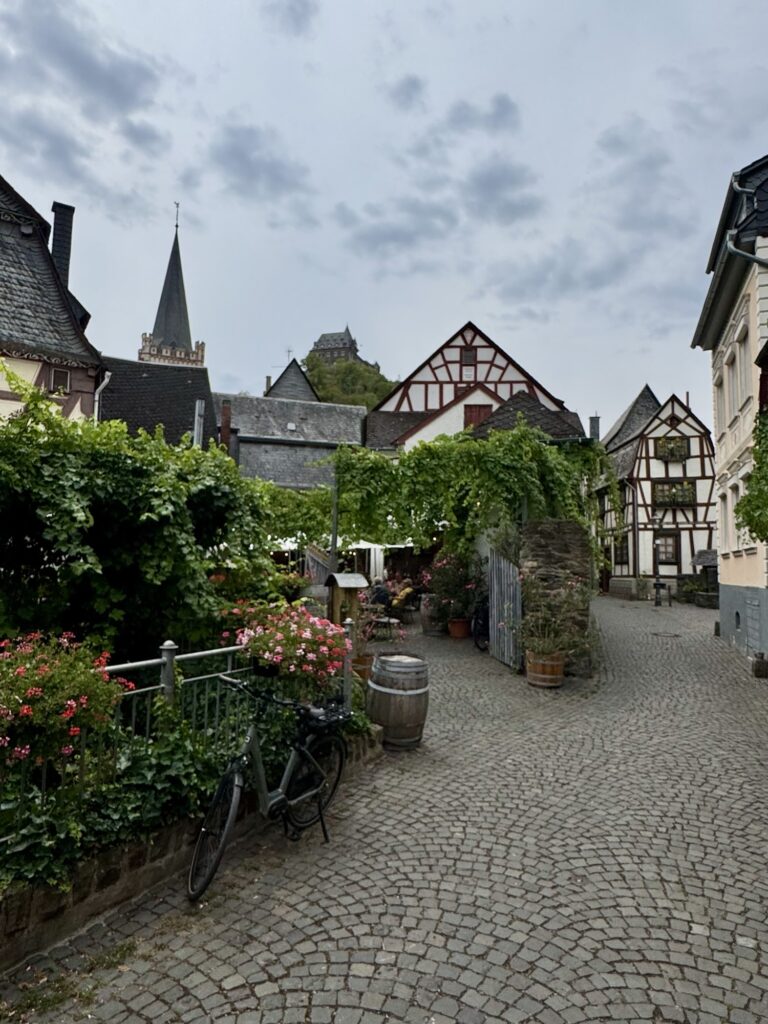
There was one last nostalgic surprise this morning when I went out to the bakery to buy some pastries for breakfast. As I opened the door, I realised it was also a café, and that a group of us had come here for coffee during the school trip. The tables looked like the same ones!
And so to our final day of cycling, back along the Rhein to Koblenz, although to a hotel near the train station this time, rather than the apartment near the Deutsches Eck where we stayed on the way. We had originally planned to cross the river today in order to cycle back on the other side for a different experience. The official cycle path is firmly on the west bank of the river, though, and what we had seen of the other side wasn’t tempting, it would have meant riding right next to a busy road for much more of the time. The ferries across the Rhein are also struggling to run at the moment, because the water level is so low, so attempting to cross would likely be doable, but might involve a long wait to get across, which didn’t sound appealing.
Back along the Eurovelo 15 it was then.
Fortunately it was much cooler today, in fact it had rained a little before we woke up. Everything felt much fresher, and we felt much fresher after our day off. We set off out of Bacharach, having really enjoyed our time there, a slightly familiar revisit for me, but also new discoveries for both of us. We passed a lovely abstract Lorelei sculpture on the way out.
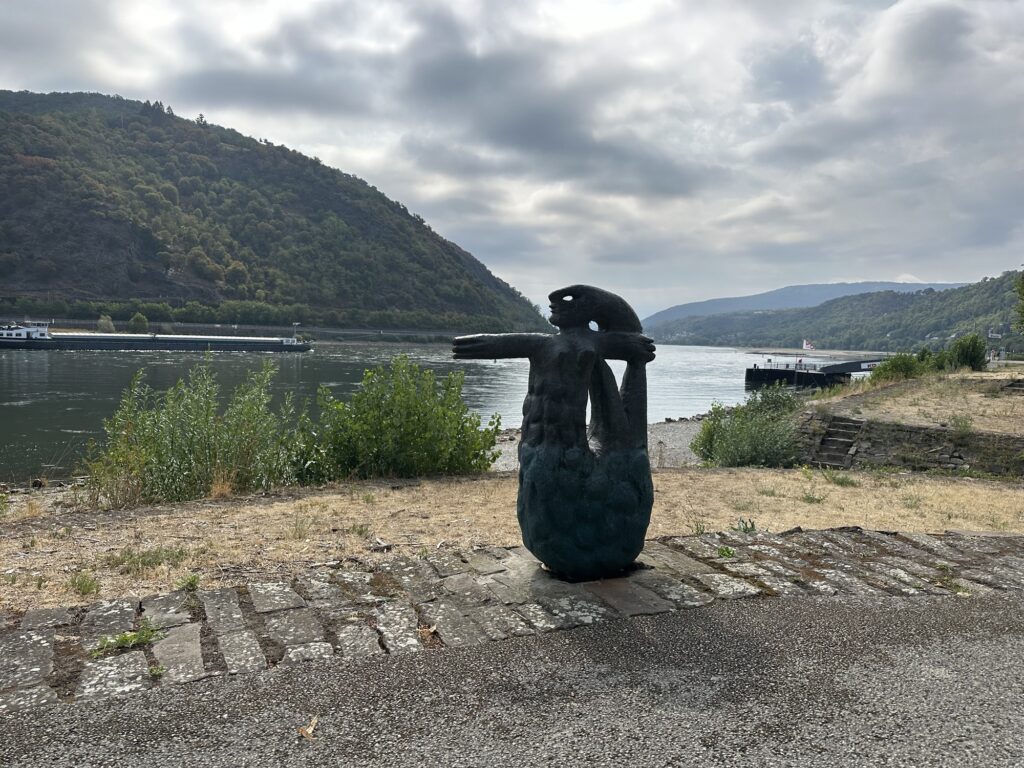
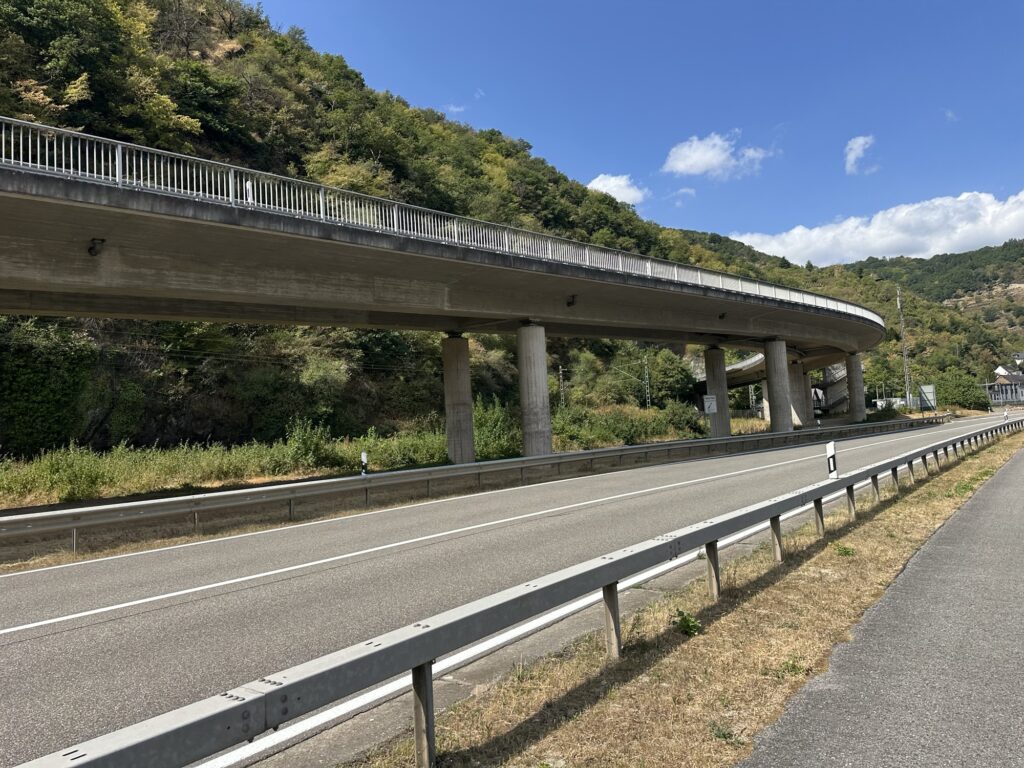
Despite the wind having taken a one hundred and eighty degree turn to give us a headwind again (of course it had…), we made excellent time, reaching Sankt Goar surprisingly quickly, where we’d stopped on the way in for the drink in the café. It was clear that the previous nine days of cycling were paying dividends now, legs strong, bums in less need of constant resting! We passed our favourite shady underpass…
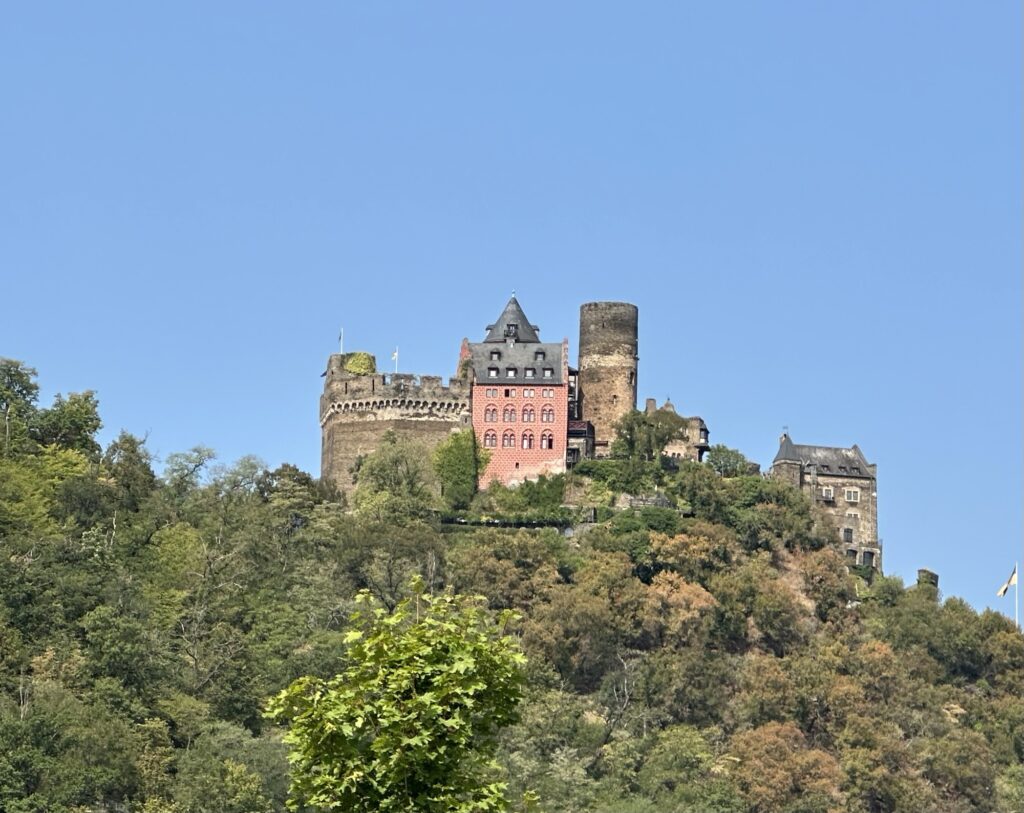
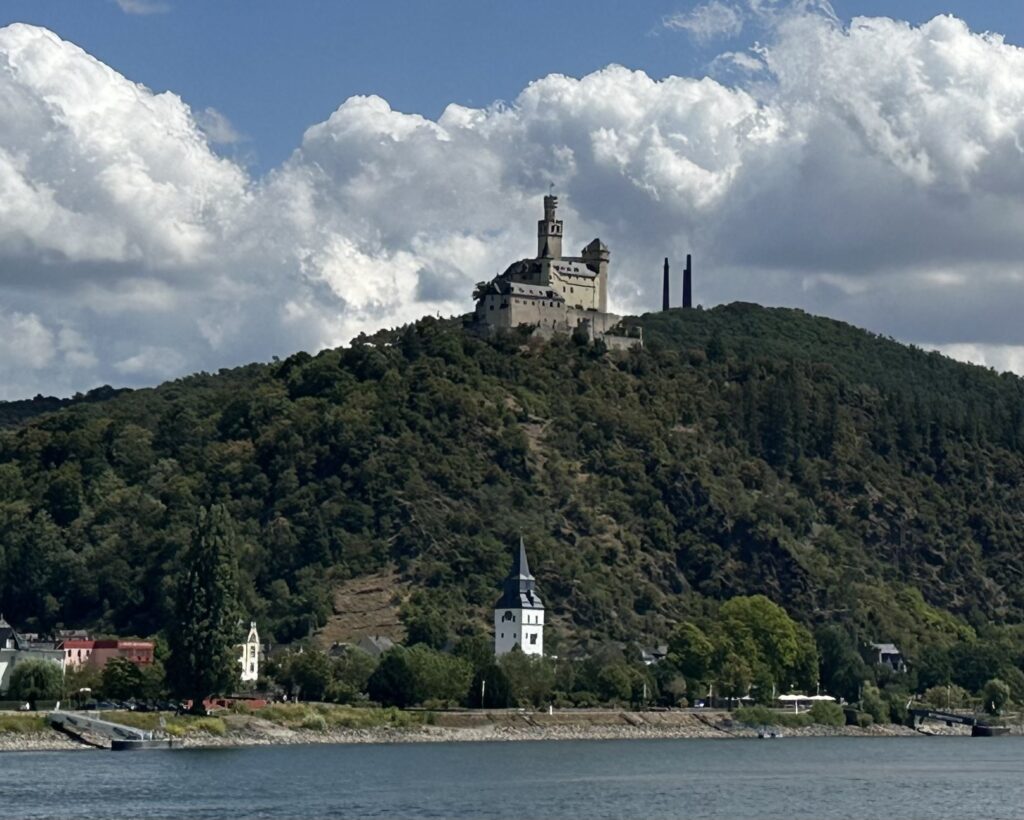
… and various familiar castles, albeit approached from the opposite direction.
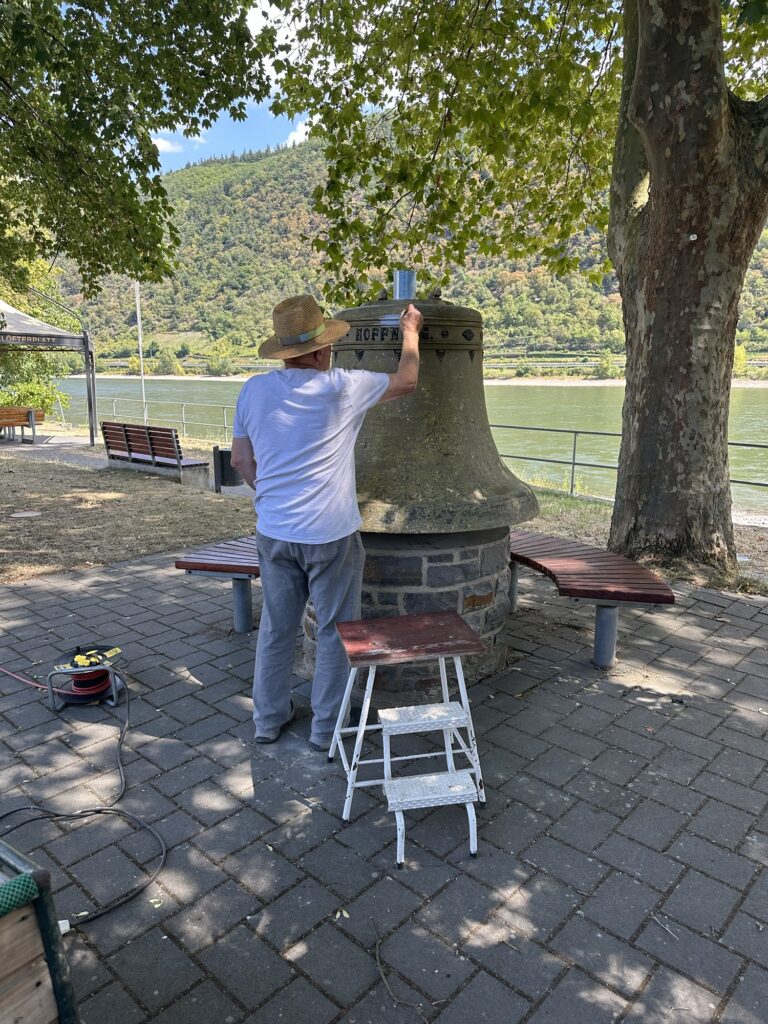
With just thirteen kilometres to go, we stopped at a little gazebo called the Boxelöfterplatz (no idea!) for a final bidon and a blueberry muffin from the Bacharach bakery. A man was doing some work on a huge bell nearby, removing some rust and painting it. It’ll look amazing when he’s finished.
Finally, we rolled back into Koblenz, stepped off the tandem and into the Hotel Brenner, where we received a very warm welcome and are installed in a lovely room.
It was done! It had been brilliant, we both felt way fitter than when we’d started, and we’d really enjoyed following the Saar, Mosel and Rhein rivers. Each had had its own characteristics, but we’d been stunned every day by the incredibly beautiful scenery they each offered from the safe and immensely well-maintained cycle paths.
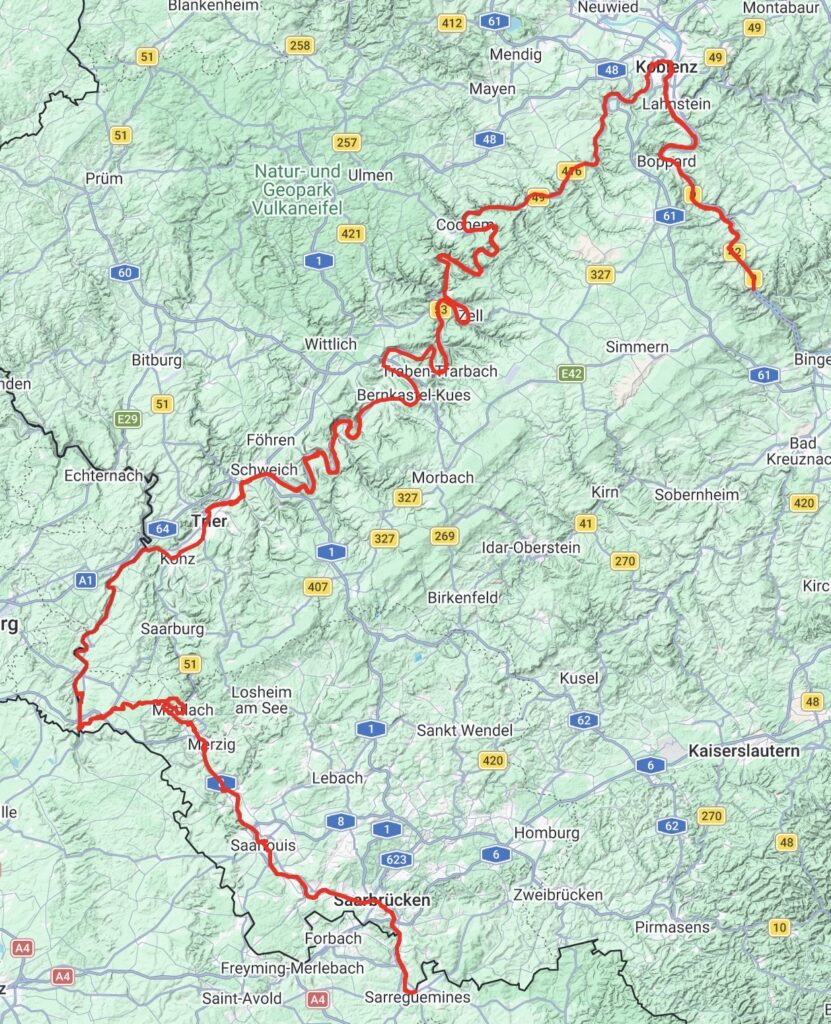
We’ll go on the train back to Sarreguemines tomorrow to collect the car, then start the journey home.
Now where exactly did I put that car key…..
Here’s today’s route:
…and a short video